
Total: $0.00
Taxes and shipping calculated at checkout

The MEASURE pillar demands evidence. Here's what each mycotoxin test actually reveals, and what it can't.
By Brian Wentzel | Mold Illness Survivor, GoneGreenStore.com
If you've been exposed to mold, that doesn't mean mycotoxins are in your body right now.
If mycotoxins are in your body, that doesn't mean you'll notice symptoms immediately.
And if you're sick from suspected mold exposure, testing the wrong fluid at the wrong time will give you false reassurance, or worse, a false positive that sends you down an expensive rabbit hole.
This is the MEASURE pillar in action: you cannot detox what you haven't confirmed.
I learned this the hard way. During my recovery from mold illness, I made every testing mistake possible. I tested too early. I tested without provocation. I tested my home but not myself. I paid thousands for tests that didn't answer the question I actually needed answered.
The functional medicine community has matured significantly over the past five years. We now have better data on urine provocation protocols, emerging evidence on hair analysis, and sobering clarity about blood mycotoxin testing's limitations. Environmental testing (ERMI and Got Mold? visual inspection) has become recognized as the logical first step, not an afterthought.
This article cuts through the confusion. It's built on what the literature tells us, what practitioners actually observe in practice, and where the honest limitations still exist.
Mycotoxins are secondary metabolites produced by certain molds. Common ones include:
When mold colonizes a building, it releases spores and mycotoxins into the air. You inhale them. Some lodge in your lungs. Some circulate in blood. Some get metabolized and excreted in urine. Some accumulate in tissues.
The key insight: different tests measure different things at different time points.
Testing urine tells you what your body has recently excreted. Testing blood tells you what's currently circulating. Testing hair is theoretically meant to show what accumulated over months, but the science here is newer and more contested.
All of this means choosing the wrong test at the wrong time in your recovery journey will waste money and delay diagnosis.
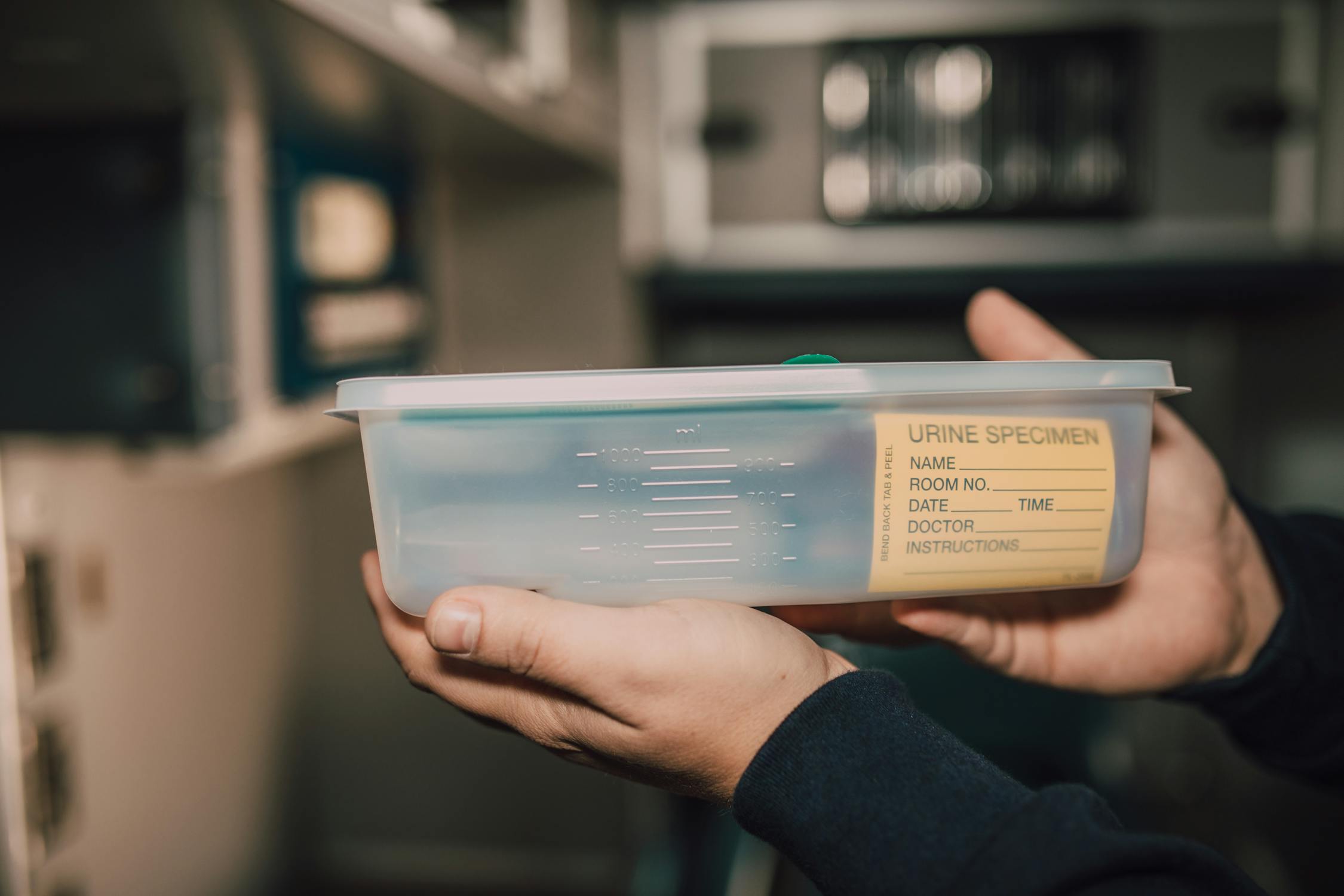
Urine mycotoxin testing captures metabolites that your kidneys have filtered and excreted. It's a snapshot of recent exposure and ongoing body burden, but only if you're actively mobilizing mycotoxins.
Here's the problem: a healthy, well-functioning detoxification system will excrete mycotoxins. A compromised system won't.
If your glutathione is depleted (common in mold illness), your mycotoxin excretion might stall. You could have a massive mycotoxin load but a negative urine test because your body simply isn't clearing it.
This is why provocation protocols exist.
A provocation protocol is exactly what it sounds like: you give the body a tool to mobilize stored mycotoxins, then test the urine.
The two most common approaches:
Glutathione provocation (IV or liposomal):
Sauna provocation:
No provocation (baseline urine):
Standard urine mycotoxin panels (LabCorp, Quest, specialty labs like RealTime Labs and Great Plains) typically measure:
The most common gap: labs don't test for all mycotoxins. Citrinin, for example, is often missed. Environmental testing of your home will tell you which mycotoxins are actually present in your space; order your urine test accordingly.
1. Timing dependency: Negative urine test ≠ no mycotoxin exposure. Your kidneys might not be clearing effectively.
2. Provocation adds cost and complexity: Glutathione IV requires clinical access. Sauna protocol takes 4–6 sessions.
3. Lab variability: Different labs use different reference ranges. A "positive" at one lab might be "borderline" at another.
4. Doesn't tell you about mycotoxin location: Urine shows what's being excreted, not where it's stored (lungs, fat, organs).
5. Environmental test still needed: A positive urine test without environmental confirmation is incomplete. You need to know what you're being exposed to.
The verdict: Urine testing with provocation is the most practical and cost-effective way to confirm recent/ongoing mycotoxin burden in the general population. It's the starting point for most people.
Blood mycotoxin testing captures circulating mycotoxins, toxins currently in your bloodstream that haven't yet been metabolized or excreted.
In theory, this sounds ideal: a direct measurement of active toxin in the blood.
In practice, blood mycotoxin levels are often extremely low because mycotoxins don't stay in circulation long. They either:
1. Low sensitivity in chronic exposure: If you've been exposed for months or years, mycotoxins have moved into tissue storage. Blood levels will likely be low or undetectable.
2. Doesn't correlate well with symptoms: A positive blood test doesn't predict symptom severity. A negative test doesn't rule out stored mycotoxins.
3. Cost-to-benefit ratio is poor: You're paying premium price for a test that's less sensitive than urine provocation at a lower price point.
4. Short window of utility: Blood mycotoxins are detectable only briefly after exposure. Test too late, and you miss them entirely.
5. Lab availability: Fewer labs offer this; interpretation varies widely.
The verdict: Blood mycotoxin testing is rarely the right choice for chronic mold illness assessment. Consider it only if you have acute exposure and test within 24–48 hours, or as part of a specialized protocol with a practitioner who can interpret the results in context.
Hair analysis for mycotoxins is the newest frontier. The theoretical advantage: hair grows continuously and accumulates minerals, metals, and (theoretically) other compounds over months. A hair sample could reveal mycotoxin accumulation over a longer timeframe than urine or blood.
Some labs now offer hair mycotoxin panels. The appeal is obvious: non-invasive, doesn't require provocation, captures a longer history.
The science is still developing. Here's what we know:
Some practitioners order hair mycotoxin tests as:
Hair mycotoxin testing might become standard in 5–10 years as the research matures. Right now, it's a promising exploratory tool, not a definitive diagnostic method. If a practitioner orders it, ask about their reference ranges and how they interpret results. If they're citing it as a primary diagnostic tool instead of urine provocation, that's a red flag.
The verdict: Hair testing is worth considering as supplementary data, but don't rely on it as your primary mycotoxin test. Urine with provocation remains superior.
Here's what I wish someone had told me in 2015: test your environment before you test your body.
If your home is moldy, your body will accumulate mycotoxins no matter what you do. You can't out-supplement a water-damaged building.
If your home is clean, and you have mycotoxin in your body, you know the exposure was past or environmental (food, work, other locations).
What it is: A dust sample from your home is analyzed for DNA of 36 different mold species. The ERMI score compares your home's mold ecology to a national baseline.
Cost: $200–$400
What it tells you:
Limitations:
What it is: A company specializing in mold inspection (Got Mold? — use code GONEGREEN10 for 10% off) that combines:
Cost: $800–$2,500 depending on home size and depth
What it tells you:
Why it's worth it: If you have mycotoxins in your urine, you need to know the source. If you're about to spend months detoxifying, you don't want to be re-exposed to the same environment.
1. Environmental test first (ERMI or Got Mold? assessment)
- Clarifies if your home is the exposure source
- If yes, remediation before personal detox
- If no, look for other exposures (workplace, past residence, food)
2. Urine mycotoxin panel with provocation (if exposure likely)
- Confirms body burden
- Gives baseline for tracking recovery
3. Hair Tissue Mineral Analysis (HTMA) for overall detox capacity (not mycotoxin-specific, but reveals nutritional status and mineral balance)
- Shows if your body can mobilize metals and toxins
- Informs supplementation strategy
- Optional but valuable for guiding protocol design
4. Retest after protocol (typically 3–6 months into detoxification)
- Confirms mycotoxin load is decreasing
- Adjusts protocol if needed
Here's the protocol we recommend at GoneGreenStore.com for anyone with suspected mold illness:
Test: ERMI or Got Mold? professional assessment
Why: Can't fix what you haven't identified
Outcome: Remediation plan (if needed) before personal testing
Test: Urine mycotoxin panel with sauna or glutathione provocation
Why: Practical, validated, cost-effective
Outcome: Baseline data; confirmation of exposure
Test: Hair Tissue Mineral Analysis (HTMA) or comprehensive metabolic panel
Why: Your ability to mobilize toxins depends on minerals, glutathione, and liver phase 2 capacity
Outcome: Informs supplement selection
Protocol: Binder support, glutathione, nutrient repletion, lifestyle (sauna, movement, sleep)
Monitoring: Symptoms, energy, digestion, sleep quality
Test: Urine mycotoxin panel with provocation (same protocol as Phase 2)
Why: Objective evidence of burden reduction
Outcome: Determines if protocol is working; adjusts if needed
HSA/FSA eligible? Usually yes, if ordered by a licensed provider with diagnosis code
HSA/FSA eligible? Sometimes, depending on carrier and practitioner
HSA/FSA eligible? Sometimes; ask lab
Tax deductible? If part of medical remediation, consult a tax advisor
A comprehensive, clinically sound assessment (environment + urine with provocation + HTMA) typically costs $1,500–$2,500 out-of-pocket. That's expensive, but it's also the most reliable data you'll have for designing a year-long detoxification protocol.
Skipping environmental testing and doing only urine testing might save $1,000 now but will cost you thousands in wasted supplements and protocols if you're still being exposed.
At GoneGreenStore.com, we recommend the EquiLife Mycotoxin Test for most people starting their functional testing journey.
1. Test your environment first (ERMI or Got Mold?)
2. Complete a provocation protocol: 4–6 sauna sessions OR one IV glutathione, spaced 24–48 hours before collection
3. Collect urine 4–6 hours after final provocation (or 6–24 hours post-IV)
4. Ship same-day (cold pack included)
5. Interpret with context: Positive result = confirmation of exposure; negative result after provocation = likely not accumulating; track trends on retest
We carry the EquiLife Mycotoxin Test in our shop, along with supporting products including far-infrared saunas for provocation and binders for phase 2 support.
Before you order your test, understand what remains uncertain:
A person with a high mycotoxin burden might feel fine. Another with a low level might be severely ill. This disconnect happens because:
The takeaway: Test results are one piece of a larger puzzle. Use them alongside symptoms, history, and genetic/immune markers.
A positive urine mycotoxin test tells you: mycotoxins are in your body. It doesn't tell you:
This is why environmental testing (ERMI, Got Mold?) is step one. Your urine test results make sense only when you understand the exposure source.
If you have symptoms consistent with mold illness but your urine mycotoxin test is negative, consider:
✓ You've had documented mold exposure (water damage, visible mold, ERMI > 2)
✓ You have symptoms consistent with mycotoxin exposure (neurological, immune, GI)
✓ Your functional medicine practitioner suspects mycotoxin contribution to your illness
✓ You're planning detoxification and want baseline data
✓ You've been treated for mold illness and want to verify clearance
✗ You haven't tested your environment yet (do that first)
✗ You're in acute phase of mold exposure (leave the building, stabilize, then test)
✗ You don't have a practitioner to interpret results and guide protocol
✗ You're testing out of anxiety without clinical indication (environmental safety is what you need, not serum levels)
✗ You're considering blood mycotoxin testing as a primary tool (urine with provocation is superior)
Mycotoxin testing is one pillar of the MEASURE protocol. To complete your functional assessment, you need:
1. Environmental confirmation → Got Mold? assessment or ERMI testing
2. Body burden confirmation → EquiLife Mycotoxin Test (urine with provocation)
3. Detox support → Binders, glutathione, and nutrient repletion
4. Progress tracking → Retest after 3–6 months
We carry all of these resources:
Ready to confirm your status? Start with environmental testing. Once you know your home is safe, order the urine panel with confidence.
This article is part of our Functional Testing hub. For complete context on the MEASURE pillar and how mycotoxin assessment fits into whole-body recovery:
Your recovery depends on clarity. Test deliberately. Interpret honestly. Track progress relentlessly.
The Two-Axis Foundation: Protect → Measure → Purify → Restore. You're here at Measure. Let's get the data right.

