
Total: $0.00
Taxes and shipping calculated at checkout

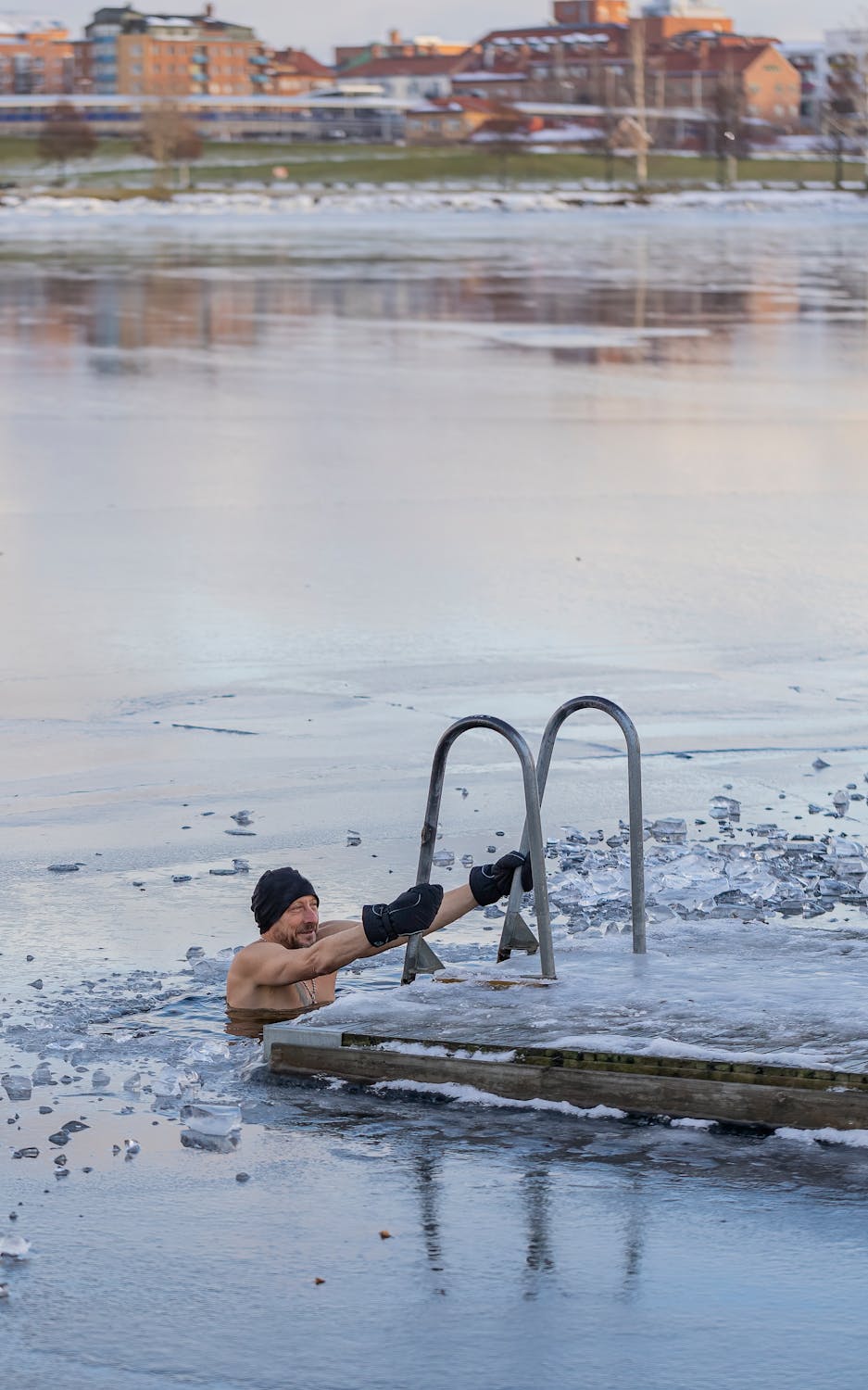
The mechanism-level science behind contrast therapy, specific protocols for the environmentally ill, and why the sequencing of heat and cold matters more than either intervention alone.
By Brian Wentzel | GoneGreenStore.com | Updated April 2026
The internet's current obsession with cold plunge therapy mostly misses the point. The Huberman clips, the Wim Hof methods, the ice bath challenges – they focus on cold exposure as an isolated practice, usually for healthy people seeking performance enhancement or mental toughness. That context has value, but it's not the conversation that matters for people dealing with mold illness, CIRS, chronic Lyme, or other conditions where the immune system is dysregulated and the autonomic nervous system is stuck in sympathetic overdrive.
For the environmentally ill, the real power isn't cold alone. It's the contrast – the deliberate cycling between infrared heat and cold exposure that creates a cascade of physiological responses greater than either stimulus can produce independently. This guide covers the mechanisms, the protocols, and the important caution that the breath-holding, extreme-cold approaches popularized on social media may not be appropriate for your situation. our complete infrared sauna therapy guide
Your lymphatic system – responsible for immune surveillance, toxin transport, and fluid balance – has no pump. Unlike the cardiovascular system, which has the heart driving circulation, lymph moves through passive mechanisms: muscle contraction, breathing, and changes in tissue pressure. In chronically ill individuals who are often deconditioned and sedentary, lymphatic flow is sluggish.
Contrast therapy creates a mechanical pump effect through alternating vasodilation (heat) and vasoconstriction (cold). During infrared sauna exposure, blood vessels dilate, increasing blood flow to the skin and periphery. During cold exposure, vessels constrict rapidly, pushing blood back to the core. This rhythmic dilation-constriction cycles fluid through tissues and drives lymphatic movement.
For mold illness patients whose lymphatic systems are burdened with inflammatory debris, immune complexes, and circulating toxins, this mechanical pumping action is significant. It's essentially passive exercise for a system that desperately needs movement.
Cold water exposure triggers a dramatic increase in norepinephrine – 200 to 300 percent above baseline in studies using cold water immersion. This neurochemical surge has several downstream effects relevant to chronic illness recovery.
Norepinephrine is a potent anti-inflammatory. It suppresses pro-inflammatory cytokines, particularly TNF-alpha and IL-6 – both of which are chronically elevated in CIRS and biotoxin illness. The anti-inflammatory effect isn't a subtle modulation – it's a significant, measurable shift in immune signaling that persists for hours after cold exposure.
Norepinephrine also sharpens focus, elevates mood, and increases alertness. For people whose chronic illness includes brain fog and cognitive impairment, the clarity that follows cold exposure can be the first time they've felt "sharp" in months. This isn't placebo – it's a documented neurochemical response to a physical stimulus.
The vagus nerve is the primary parasympathetic pathway – the "rest and digest" counterbalance to the sympathetic "fight or flight" system. In chronic inflammatory conditions, the vagus nerve is often suppressed. The sympathetic nervous system dominates, driving anxiety, insomnia, digestive dysfunction, and immune dysregulation.
Cold exposure stimulates the vagus nerve through cold receptors in the skin, particularly in the face, neck, and chest. This stimulation activates the cholinergic anti-inflammatory pathway – a direct neural mechanism for reducing systemic inflammation. Studies have shown that vagal stimulation decreases inflammatory cytokine production and improves heart rate variability (HRV), a key marker of autonomic balance.
For mold and CIRS patients specifically, vagal restoration is one of the most underappreciated recovery strategies. When your autonomic nervous system has been stuck in sympathetic overdrive from chronic toxin exposure, retraining parasympathetic activation through cold stimulus is a fundamentally corrective intervention. mold illness mechanisms guide
Beyond the norepinephrine-mediated anti-inflammatory effect, contrast therapy modulates immune function through heat shock proteins (produced during sauna) and cold shock proteins (produced during cold exposure). Heat shock protein 70 (HSP70), in particular, has been shown to regulate immune cell function and protect against excessive inflammatory responses.
The combination of heat and cold shock protein production creates a "training effect" for the immune system – similar to how exercise trains the cardiovascular system. Regular contrast therapy exposure teaches the immune system to mount appropriate responses and then resolve them, rather than remaining in chronic activation.
The order isn't arbitrary. Infrared heat first, cold exposure second, and here's why.
Infrared sauna therapy mobilizes toxins from fat tissue, enhances circulation, and triggers a deep sweat that supports elimination. This is the "work" phase of the protocol. The heat does the heavy lifting of detoxification. what leaves your body in sweat
Cold exposure following heat serves multiple purposes. It closes the pores that opened during the sauna session, potentially reducing reabsorption of sweat-borne compounds on the skin surface. It triggers the norepinephrine surge and vagal activation described above. And it creates the contrast effect that drives lymphatic pumping.
Reversing the order – cold first, heat second – produces a different physiological sequence. Cold first constricts surface vessels, which means the subsequent heat session has to work harder to achieve core temperature elevation and may produce less effective sweating. For detox purposes, heat first is more productive.
There's also a practical comfort factor: ending with cold feels invigorating and energizing. Ending with heat feels relaxing and lethargic. Most people prefer to finish a contrast session feeling alert and sharp rather than drowsy.
For people new to contrast therapy, particularly those with chronic illness, starting gently is essential. Overexposure to cold can trigger stress responses that worsen symptoms in people whose autonomic nervous systems are already dysregulated.
Start your infrared sauna session at your established protocol settings (the "low and slow" approach from Spoke 3 if you're still building tolerance). After your heat session, begin cold exposure with cool (not cold) water – 65 to 70 degrees Fahrenheit. Apply to hands, feet, and forearms for 30 to 60 seconds. You can do this with a cold shower – you don't need a dedicated cold plunge to start.
The key is ending on cold. Even 30 seconds of cool water after a heat session initiates the contrast response. Your body doesn't need ice water to trigger norepinephrine release and vagal activation at this stage.
Progress to colder temperatures – 55 to 65 degrees Fahrenheit – and longer durations – 1 to 3 minutes. Full body immersion (cold shower covering neck and chest) or a cold plunge at the warmer end of the range. Immediately following your standard sauna session.
At this stage, you can begin experimenting with multiple contrast cycles: heat (20-30 minutes), cold (1-3 minutes), heat (10-15 minutes), cold (1-2 minutes). Multiple cycles amplify the lymphatic pump effect and extend the norepinephrine elevation.
Cold plunge at 39 to 55 degrees Fahrenheit for 2 to 5 minutes following a full sauna session. Some practitioners recommend up to 11 minutes per week of total cold exposure (Dr. Andrew Huberman's suggestion based on norepinephrine research), split across 2 to 4 sessions.
At the advanced level, the contrast protocol might look like: 30 to 45 minutes infrared sauna at 130 to 150 degrees Fahrenheit, followed by 3 to 5 minutes cold plunge at 40 to 50 degrees Fahrenheit, with an optional second heat/cold cycle of shorter duration.
Skip cold exposure on days when you're having a significant Herxheimer reaction or detox flare. Your body is already under stress – adding cold stress on top can push the system past its adaptive capacity. identifying detox reactions
People with Raynaud's phenomenon, uncontrolled cardiovascular conditions, or severe autonomic dysfunction should approach cold exposure with extreme caution and practitioner guidance. Cold immersion triggers a significant cardiovascular response (increased heart rate and blood pressure through the "cold shock response"), which can be dangerous for people with unstable cardiac conditions.
The Wim Hof Method combines cold exposure with specific breathing techniques – including aggressive hyperventilation and prolonged breath holds. For healthy individuals, this combination can produce profound states of autonomic control and immune modulation. For environmentally ill individuals, some components require caution.
Aggressive hyperventilation drives blood pH alkaline, triggers CO2 depletion, and creates cerebral vasoconstriction. For someone whose nervous system is already sensitized from chronic toxin exposure, the combination of hyperventilation-induced alkalosis with cold-triggered sympathetic activation can provoke panic attacks, extreme dizziness, syncope (fainting), or extended autonomic dysfunction episodes.
The cold exposure component is valuable. The breath-holding component can be risky for this population. Gentler breathing approaches – slow, diaphragmatic breathing during cold exposure, emphasizing extended exhales to activate the parasympathetic pathway – achieve vagal activation without the autonomic destabilization that aggressive breath techniques can produce.
Box breathing (4 seconds inhale, 4 seconds hold, 4 seconds exhale, 4 seconds hold) during cold exposure is a safer alternative that still activates parasympathetic pathways. The focus should be on calm, controlled breathing that tells your nervous system "I am safe despite this cold stimulus" – retraining the stress response rather than overwhelming it.
The Therasage TheraFrost cold plunge was designed to pair with the Thera360 Plus infrared sauna as part of the Overcoming Chronic Illness Bundle. It maintains consistent water temperature through a dedicated cooling system – eliminating the inconsistency of ice-based approaches where water temperature rises throughout the session.
Consistent temperature matters for protocol-based use because it allows precise, reproducible exposure. When your protocol calls for 50 degrees for 3 minutes, the TheraFrost delivers exactly that, session after session. Ice baths start at one temperature and warm progressively, making dosing inconsistent.
The combination of Thera360 Plus (full-spectrum infrared sauna with low EMF, tourmaline, and optional ozone) with TheraFrost (consistent-temperature cold plunge) creates a complete contrast therapy system designed specifically for the environmental health recovery application – not repurposed from the athletic recovery market. complete sauna comparison guide
Contrast therapy – infrared heat followed by cold exposure – produces a set of physiological responses that are uniquely valuable for people recovering from environmental illness. The lymphatic pumping, norepinephrine surge, vagal nerve activation, and immune modulation address core dysfunctions present in mold illness, CIRS, and chronic inflammatory conditions.
Start gently. Sequence correctly (heat first, cold second). Use controlled breathing instead of aggressive hyperventilation. Build tolerance over weeks, not days. And recognize that the goal isn't extreme cold endurance – it's training your autonomic nervous system to respond appropriately to stimulus, which is exactly what chronic illness disrupts.
Next Steps:
Explore the Therasage Overcoming Chronic Illness Bundle that pairs infrared sauna with cold plunge for a complete contrast therapy protocol. environmental optimization framework
This article is part of the complete mold recovery framework on GoneGreenStore.com. Explore related guides:

