
Total: $0.00
Taxes and shipping calculated at checkout

You spent months, maybe years, fighting a battle most doctors could not even diagnose. Mold illness. CIRS. Chronic inflammatory response syndrome. Whatever name you give it, the experience is the same: your body was poisoned by your own home, and recovery meant tearing your life apart and rebuilding it from the foundation up.
You left the moldy house. You did the Shoemaker protocol, or the Neil Nathan approach, or some combination of functional medicine that finally started working. You found a clean home. You replaced your HVAC. You got your ERMI scores down. You are healing.
And then you climb into bed every night and sleep on a mattress filled with polyurethane foam, synthetic flame retardants, and chemical adhesives that are off-gassing volatile organic compounds directly into your breathing zone for eight hours straight.
That is the contradiction almost nobody talks about. People who have spent tens of thousands of dollars on mold remediation, air purifiers, binder protocols, and functional medicine visits are sleeping on bedding that is actively working against their recovery. Not because they do not care. Because nobody told them the bedding matters this much.
This guide is the resource we wish existed when we were going through it. It covers why your sleep environment matters more than almost any other room in your recovery, which materials to avoid, which materials are genuinely safe, and the specific products we carry at Gone Green after seventeen years of evaluating health products for chemically sensitive customers.
You spend roughly one-third of your life in your bedroom. During sleep, your breathing rate is steady, your body is in repair mode, and your immune system is doing its most critical work. Whatever is in your immediate sleep environment, you are breathing it in, continuously, for six to nine hours every night.
For a healthy person, trace amounts of VOCs from a conventional mattress may not cause noticeable symptoms. For someone recovering from mold illness, with an immune system that has been primed to react to environmental triggers, those same trace amounts can be the difference between progress and plateau.
The science behind this is straightforward. Volatile organic compounds are chemicals that off-gas from synthetic materials at room temperature. Polyurethane foam, the primary material in most conventional mattresses, releases VOCs including toluene, formaldehyde, and benzene. Chemical flame retardants, required by federal flammability standards, add another layer of exposure. Synthetic dyes, adhesives, and fabric treatments contribute more.
A 2019 study published in Environmental Science and Technology found that conventional mattresses can emit dozens of different VOCs, with emission rates highest during the first months of use but continuing at lower levels for years. For someone with CIRS, whose detoxification pathways are already compromised and whose mast cells may be hyperreactive, this chronic low-level exposure is not trivial. It is a persistent inflammatory trigger.
Before we talk about what to buy, you need to know what to avoid. These are the materials and treatments found in conventional bedding that are most problematic for mold illness survivors and chemically sensitive individuals:
Polyurethane foam is the foundation of most conventional mattresses, including many that market themselves as "eco-friendly." Memory foam is a type of polyurethane foam. It is made from petroleum-derived chemicals and is the primary source of mattress off-gassing. Some manufacturers use plant-based polyols to reduce the petroleum content, but the foam still contains isocyanates and other reactive chemicals.
Chemical flame retardants have been the subject of increasing scrutiny. Common ones include polybrominated diphenyl ethers (PBDEs), chlorinated tris, and antimony trioxide. These chemicals are persistent, bioaccumulative, and have been linked to endocrine disruption. While some have been phased out, replacement chemicals are not necessarily safer. The safest approach is bedding that meets flammability standards through inherently flame-resistant materials like wool rather than chemical treatments.
Synthetic latex (styrene-butadiene rubber) is sometimes marketed alongside natural latex but is a fundamentally different material with different off-gassing characteristics. Even natural latex can be problematic for some chemically sensitive individuals due to its distinctive odor and the vulcanization chemicals used in processing.
Conventional cotton, unless certified organic, may carry pesticide residues from cultivation (cotton is one of the most pesticide-intensive crops in the world) and chemical treatments from processing including bleaching agents, formaldehyde-based wrinkle resistance treatments, and synthetic dyes.
Adhesives and glues are used in mattress construction to bond layers together. Many contain formaldehyde or other VOCs. The safest mattresses and bedding products are constructed without adhesives entirely, using mechanical fastening or hand-tufting instead.
Wool is not just a natural alternative to synthetic materials. It has specific properties that make it uniquely suited for people recovering from mold illness and environmental sensitivity:
Mold and mildew resistance is built into wool at the fiber level. Wool fibers naturally wick moisture away from the body and release it into the air, maintaining a dry microenvironment that is inhospitable to mold growth. Independent testing has demonstrated that wool bedding does not support the growth of dust mites or mold, unlike synthetic alternatives where both thrive.
In controlled laboratory tests, dust mites and fungal spores were introduced to both wool and synthetic bedding under conditions that perfectly simulated a typical sleeping environment over six weeks. The dust mites thrived in the synthetic material, reproducing and increasing allergen levels. In the wool bedding, the lack of humidity and the inability of the fungal food source to survive resulted in zero live dust mites or dust mite allergens surviving the test period.
Natural flame resistance eliminates the need for chemical flame retardants entirely. Wool is inherently self-extinguishing because its high nitrogen and water content make it difficult to ignite, and it will not sustain a flame. This means wool bedding can meet federal flammability standards without any chemical treatments, which is critical for chemically sensitive individuals.
Temperature regulation keeps your body in the optimal zone for deep, restorative sleep. Wool fibers can absorb up to 30 percent of their weight in moisture without feeling damp, then slowly release it. This creates a stable sleep climate that reduces night sweats, a common complaint among CIRS patients.
Hypoallergenic properties round out the picture. Many people who believe they are allergic to wool are actually reacting to the harsh chemical processing agents used on commercially available wool, not to the wool fiber itself. Organic wool that has been processed without chemicals is tolerated by the vast majority of people, including those with multiple chemical sensitivities.
Gone Green has been in the health and wellness space for over seventeen years. We have evaluated hundreds of products across dozens of categories. When we decided to offer bedding, we applied the same standard we apply to everything: we read the ingredient list, we researched the manufacturing process, and we asked whether this product would be safe for our most sensitive customers.
Holy Lamb Organics met every criterion. Here is what sets them apart:
Handmade in Oakville, Washington using only Premium Eco-Wool sourced from small American sheep farmers. The wool is never chemically treated with pesticides or flame retardants. The facility is scent-free and chemical-free, a detail that matters enormously for MCS patients who react to residual manufacturing chemicals.
Their certifications include GOTS (Global Organic Textile Standard), OEKO-TEX Standard 100, and Green America Certification. GOTS certification means the entire production chain, from raw material to finished product, has been audited for organic integrity and environmental responsibility. OEKO-TEX tests the finished product for over 100 harmful substances.
Their construction philosophy is zero synthetics. Only Premium Eco-Wool, organic cotton, and natural latex. No polyurethane foam. No chemical flame retardants. No synthetic dyes. No adhesives. Products are hand-sewn, not glued. Their commitment extends to 100 percent zero waste of manufacturing by-products.
For mold illness survivors specifically, Holy Lamb offers material sensitivity kits. These kits contain samples of their raw materials so you can test your tolerance before making a purchase. This is not something Avocado, Naturepedic, or any mainstream brand offers, and it demonstrates an understanding of the chemically sensitive buyer that is rare in the bedding industry.
A complete non-toxic sleep system is not just a mattress. It is every layer between you and the bed frame, plus the pillows, the comforter, and even the mattress protector. Each layer is an opportunity for either clean materials or chemical exposure.
Start with the mattress or mattress topper. If replacing your entire mattress is not immediately feasible, a wool mattress topper over your existing mattress creates a barrier between you and the synthetic materials beneath while providing the moisture-wicking and mold-resistant benefits of wool. Holy Lamb's Deep Sleep Mattress Topper is our most popular recommendation for this purpose.
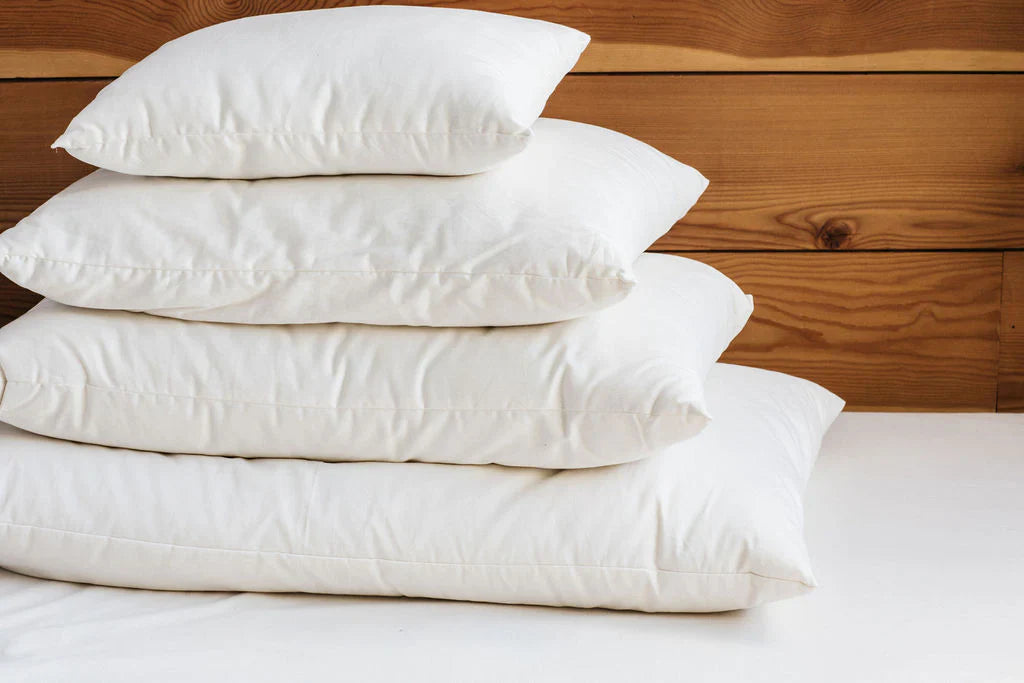
Next, address your pillow. You breathe directly into your pillow for hours every night. A conventional pillow filled with polyester fiberfill or memory foam puts synthetic chemicals in your closest breathing zone. An organic wool pillow eliminates that exposure entirely while providing naturally adjustable loft and support.
Then the comforter. A wool-filled, organic cotton-encased comforter replaces synthetic down alternatives (which are typically made from polyester) and conventional down (which is often treated with chemical anti-allergen coatings). Wool naturally regulates temperature, so you stay warm without overheating.
Finally, the mattress protector. If you are using a conventional mattress beneath your wool topper, a wool moisture barrier prevents moisture from reaching the mattress while maintaining breathability. Conventional waterproof mattress protectors are typically made from polyurethane or vinyl, both of which off-gas.
Non-toxic bedding costs more than conventional alternatives. A Holy Lamb organic wool mattress topper runs several hundred dollars. A complete sleep system with mattress, topper, pillows, and comforter is a significant investment.
Put that in context. The average CIRS patient spends $10,000 to $50,000 or more on diagnosis, treatment, remediation, and relocation. They spend thousands on air purifiers, binder supplements, functional medicine visits, and specialty lab tests. Against that backdrop, investing in bedding that supports rather than undermines your recovery is not a luxury. It is the most cost-effective intervention you have not made yet.
And unlike supplements that you consume and replace monthly, quality organic wool bedding lasts 15 to 20 years. The per-night cost over its lifetime is remarkably low.
If you are rebuilding your sleep environment after mold illness, start with the single change that puts the cleanest material in your closest breathing zone: your pillow. An organic wool pillow is the lowest-cost entry point into non-toxic sleep, and it addresses the highest-exposure contact point.
From there, add a wool mattress topper to create a clean barrier over your existing mattress. Then upgrade the comforter. Build the system gradually if budget requires it. Every layer you replace moves you closer to a sleep environment that supports your healing rather than working against it.
Browse our complete Holy Lamb Organics collection at Gone Green, or read our detailed product reviews in the articles below to find the right starting point for your situation.
