
Total: $0.00
Taxes and shipping calculated at checkout

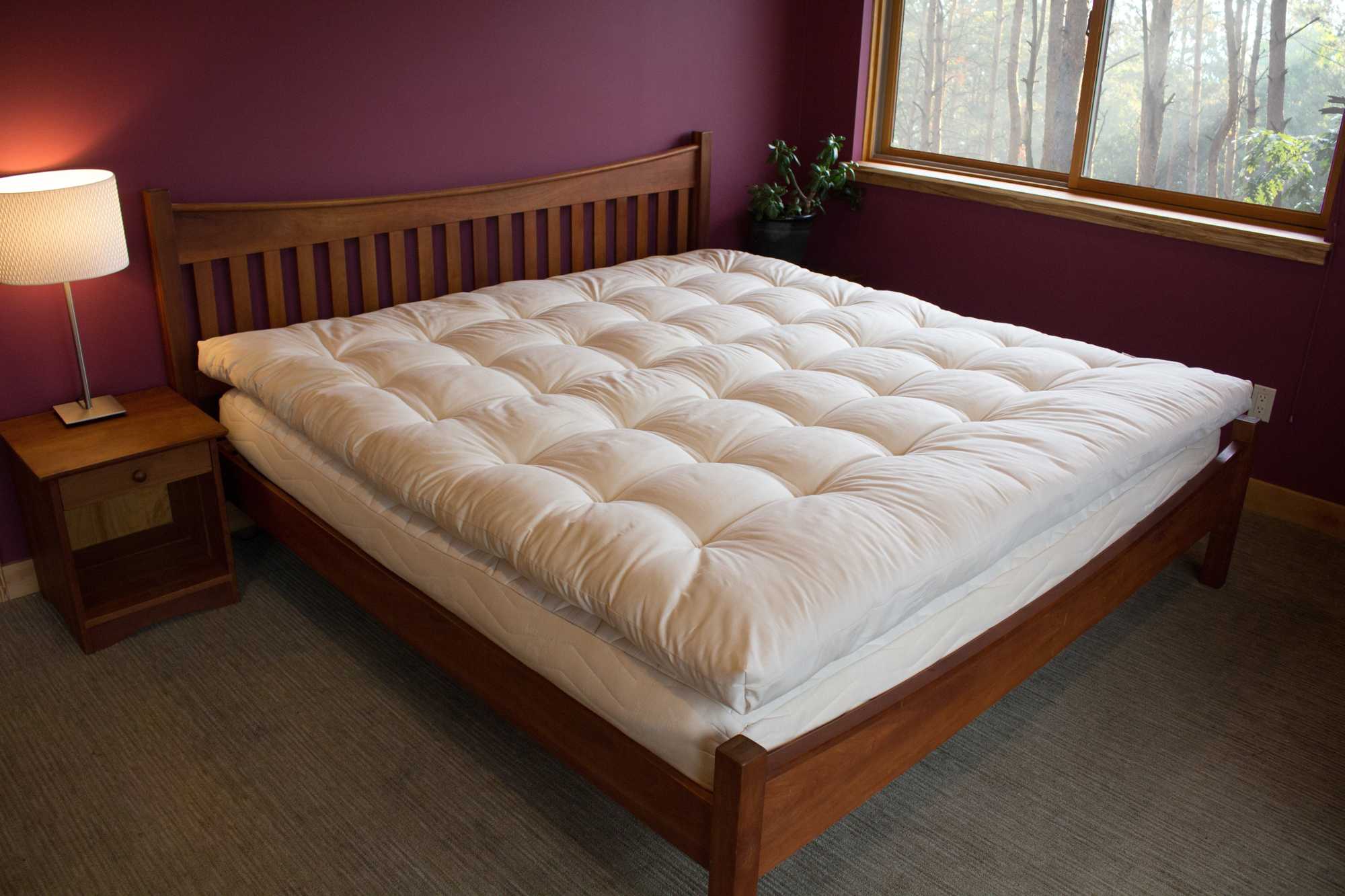
You did everything right. You found the mold. You left the house. You remediated or relocated. You replaced your HVAC system. You bought air purifiers. You started binders and detox protocols. Your ERMI scores came back clean. Your doctor says the environment is clear.
But you are still not sleeping well. You still wake up congested. Your inflammation markers are not dropping as fast as they should. Something is still triggering your system.
Before you add another supplement or schedule another round of labs, look at what you are sleeping on.
The typical mattress sold in the United States contains polyurethane foam as its primary comfort material, chemical flame retardants to meet federal flammability standard 16 CFR 1633, synthetic adhesives bonding the layers together, polyester fiber batting, and synthetic fabric covers treated with stain-resistant and anti-microbial chemicals.
Each of these materials releases volatile organic compounds. VOCs are gases emitted at room temperature from solid materials. You know the “new mattress smell” that is actually a cocktail of chemicals entering your breathing air. In a healthy person, the immune system can generally handle this low-level exposure. In someone with CIRS, whose immune system is already hyperactivated and whose detoxification pathways are impaired, this chronic exposure is a persistent inflammatory insult.
A 2019 study in Environmental Science and Technology documented that conventional mattresses emit measurable levels of toluene, formaldehyde, and other VOCs for months after purchase, with some chemicals detectable for years. You are not imagining it. The off-gassing is real, it is measurable, and for someone with mold illness, it matters.
Beyond chemical off-gassing, conventional mattresses have a moisture problem that is directly relevant to mold illness. The average person releases roughly one pint of moisture per night through sweat and respiration. Polyurethane foam absorbs this moisture and holds it. The interior of a foam mattress can become a humid microenvironment, exactly the conditions that support mold and dust mite growth.
Some conventional mattresses have actually been found to grow mold internally, particularly in humid climates or when used with non-breathable mattress protectors. For someone recovering from mold illness, the idea of sleeping on a mattress that may be growing mold inside its foam layers is not just unpleasant. It is potentially re-exposing you to the very mycotoxins you spent years trying to eliminate.
Simply buying a mattress labeled “organic” does not solve the problem. Many organic mattresses still use natural latex, which some chemically sensitive individuals react to due to its strong odor and the sulfur-based vulcanization process used to create it. Some use organic cotton without wool, which lacks the mold-resistant and moisture-wicking properties that make wool uniquely suitable.
The solution is a mattress or mattress topper constructed from materials that are inherently non-toxic, naturally flame-resistant, actively mold-resistant, and processed in a chemical-free environment. Organic wool meets all four criteria. It is the only common bedding material that checks every box for the mold illness survivor.
If replacing your entire mattress is not feasible right now, an organic wool mattress topper is the most impactful single change you can make. It creates a clean barrier between your body and the synthetic materials beneath while adding the moisture-management and antimicrobial benefits of wool to your sleep surface.

